
Department for Education
Designing a national campaign to address online radicalisation
Context
Online radicalisation in minors is a growing risk, but there was no clear, joined-up response.
Responsibility was unclear. Education, policing, and security partners all had a role, but no shared approach. There was also a deeper challenge:
The issue is hard to explain
It often starts subtly
It doesn’t look like a traditional threat
This made it difficult to communicate clearly or take action early.
My role
I led the project from idea to delivery.
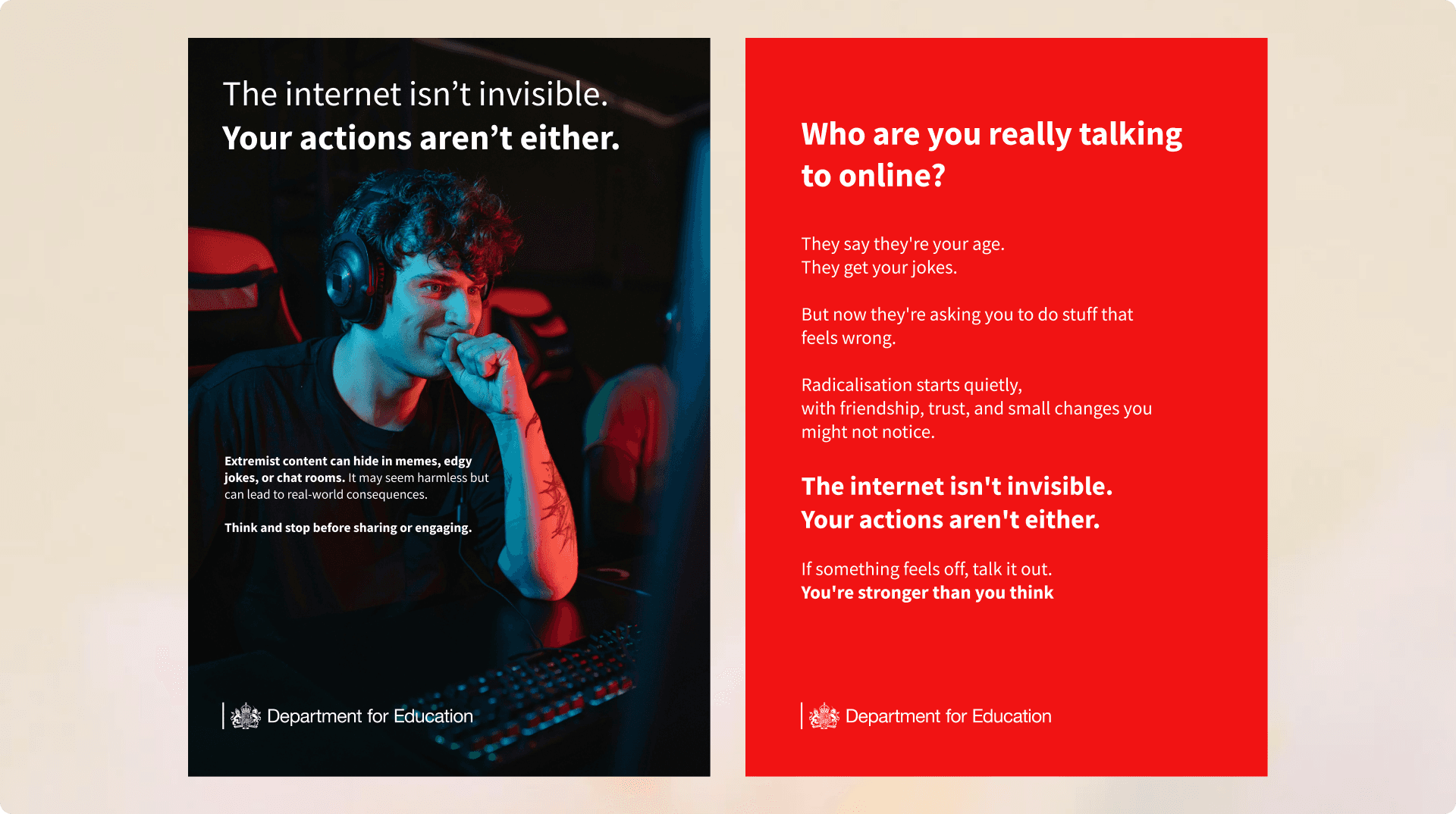
What started as an observation became a fully developed campaign, shaped through design and collaboration with national stakeholders. I:
Defined the problem and campaign direction
Led design and creative direction with two designers
Worked closely with stakeholders across education, policing, and security
Developed messaging, tone of voice, and visual identity
Used design to align teams around a shared approach
Key work
Turned a complex issue into something people can recognise
The challenge wasn’t just awareness. It was helping people spot something that often looks normal at first.
I focused the campaign on:
subtle behaviour shifts
early warning signs
real-world consequences
Used AI to accelerate research and messaging
I used AI to explore messaging directions quickly, layering this with research across:
minors
parents and guardians
educators
This helped test tone, language, and framing early.
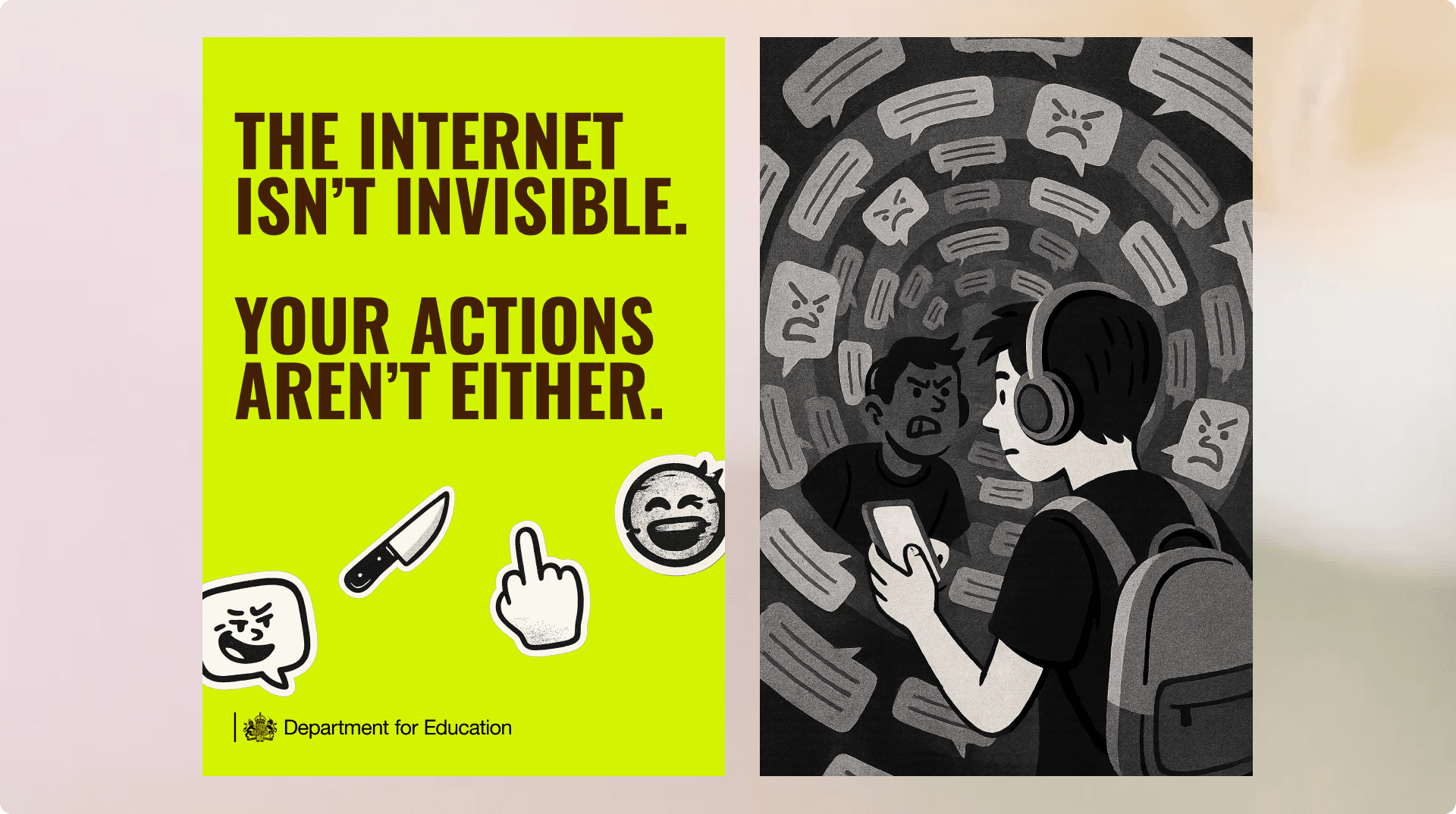
Developed and tested multiple campaign directions
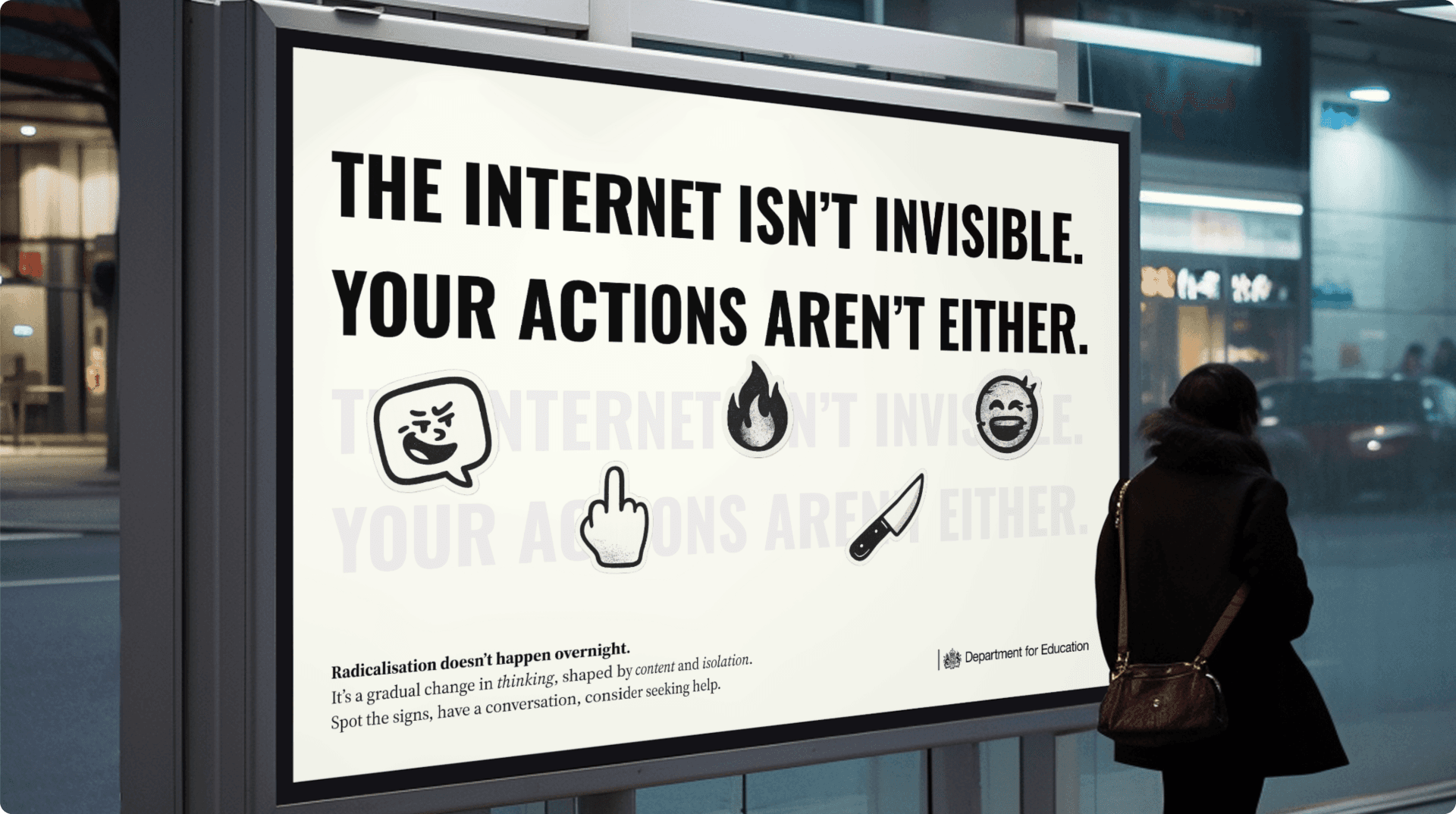
I created three distinct concepts, each built around two core slogans.
These were used to:
test clarity and impact
support stakeholder discussion
move decisions forward quickly
Used design to align stakeholders
The work spanned multiple organisations with different priorities.
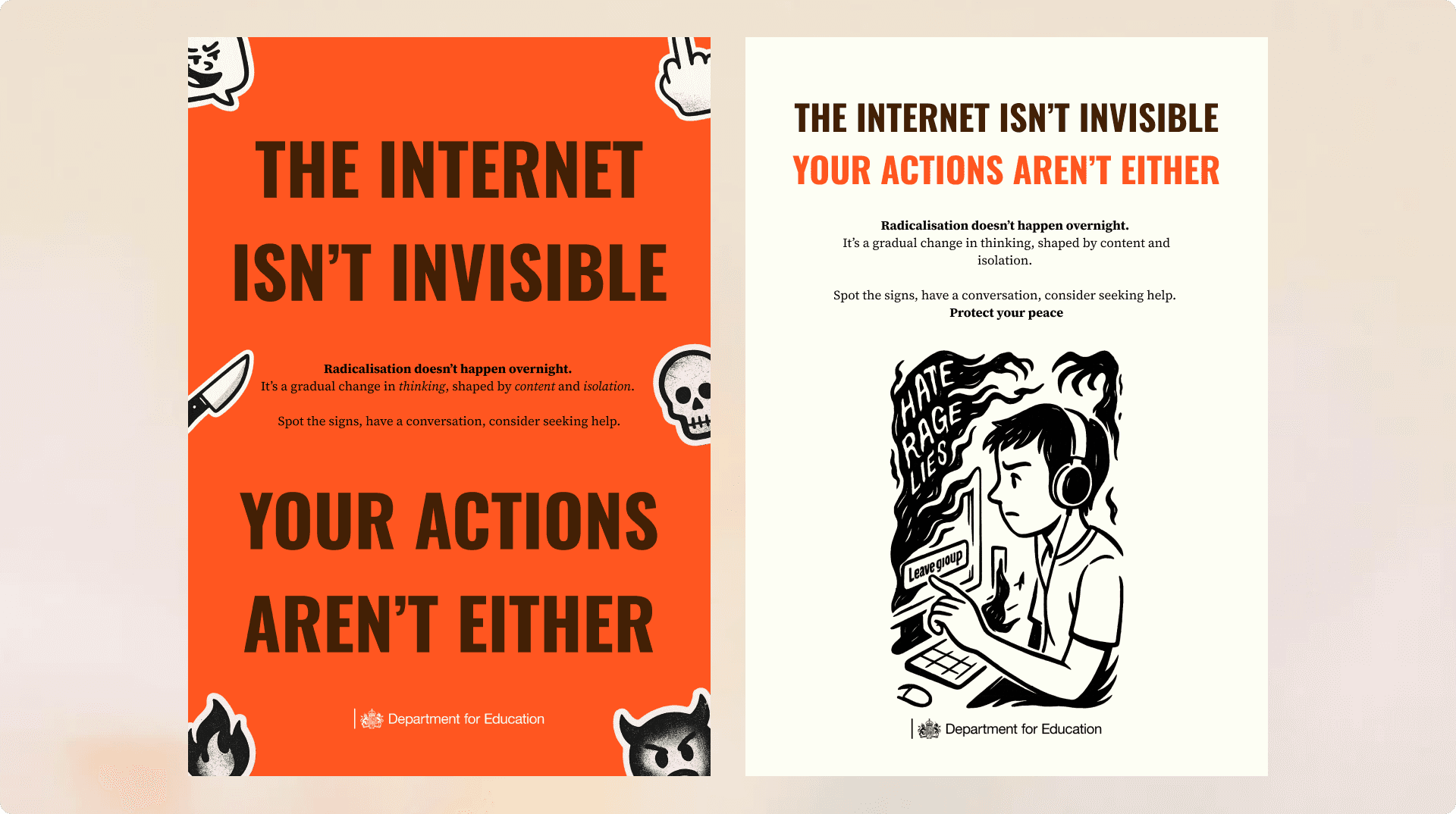
I used design artefacts to:
focus the problem
make decisions tangible
bring teams to agreement
Output
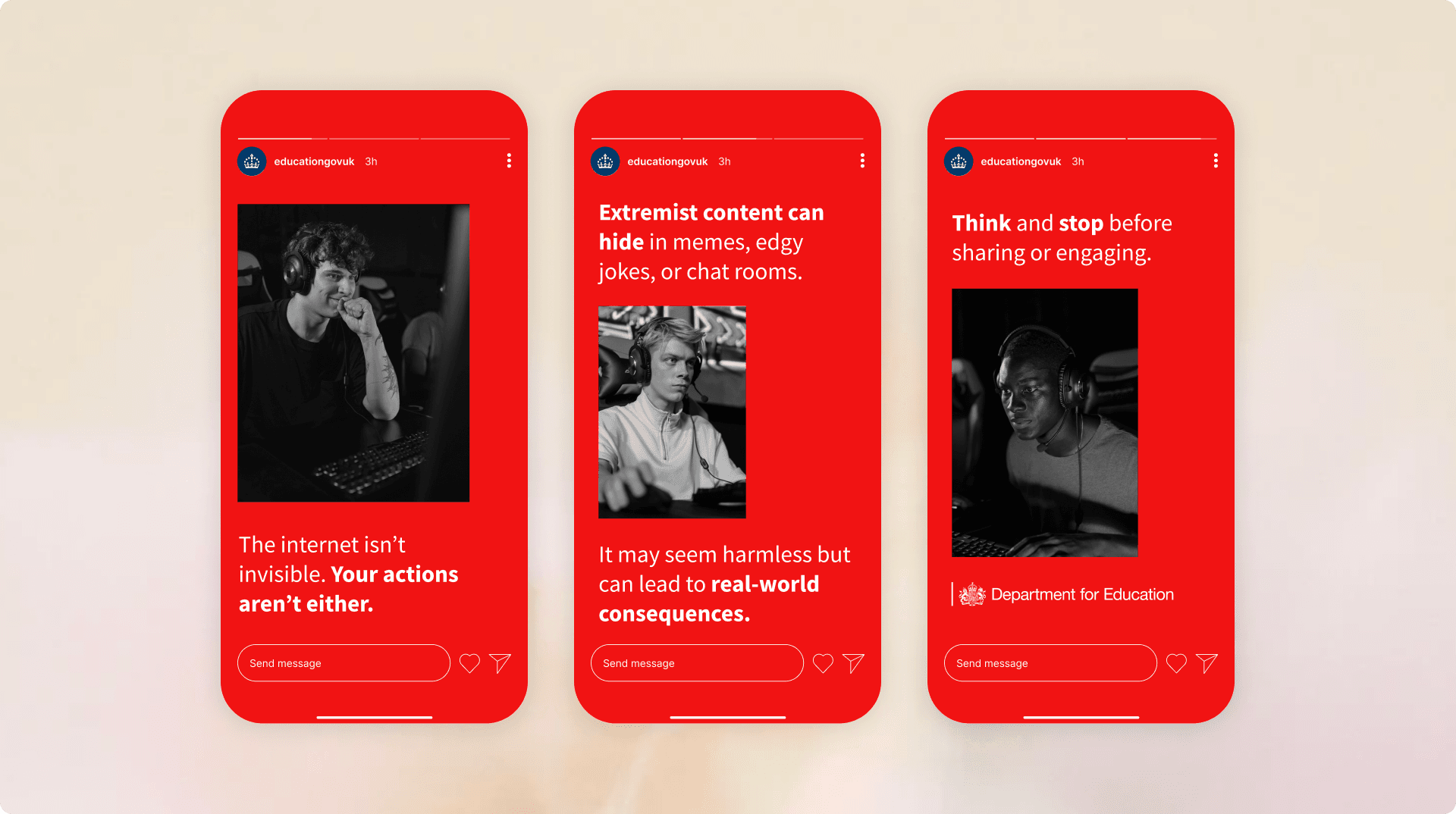
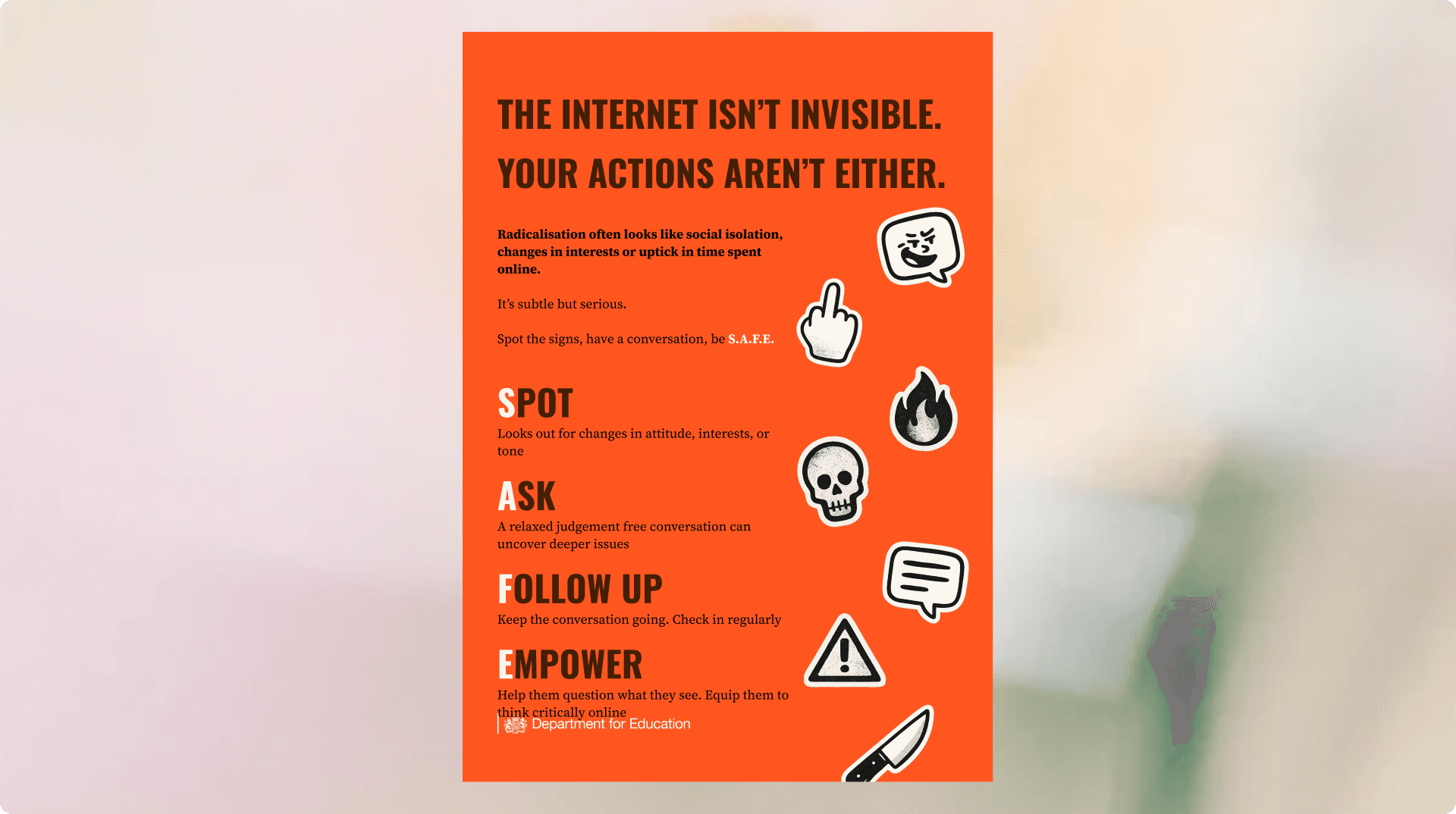
A full campaign identity, including tone of voice and messaging strategy
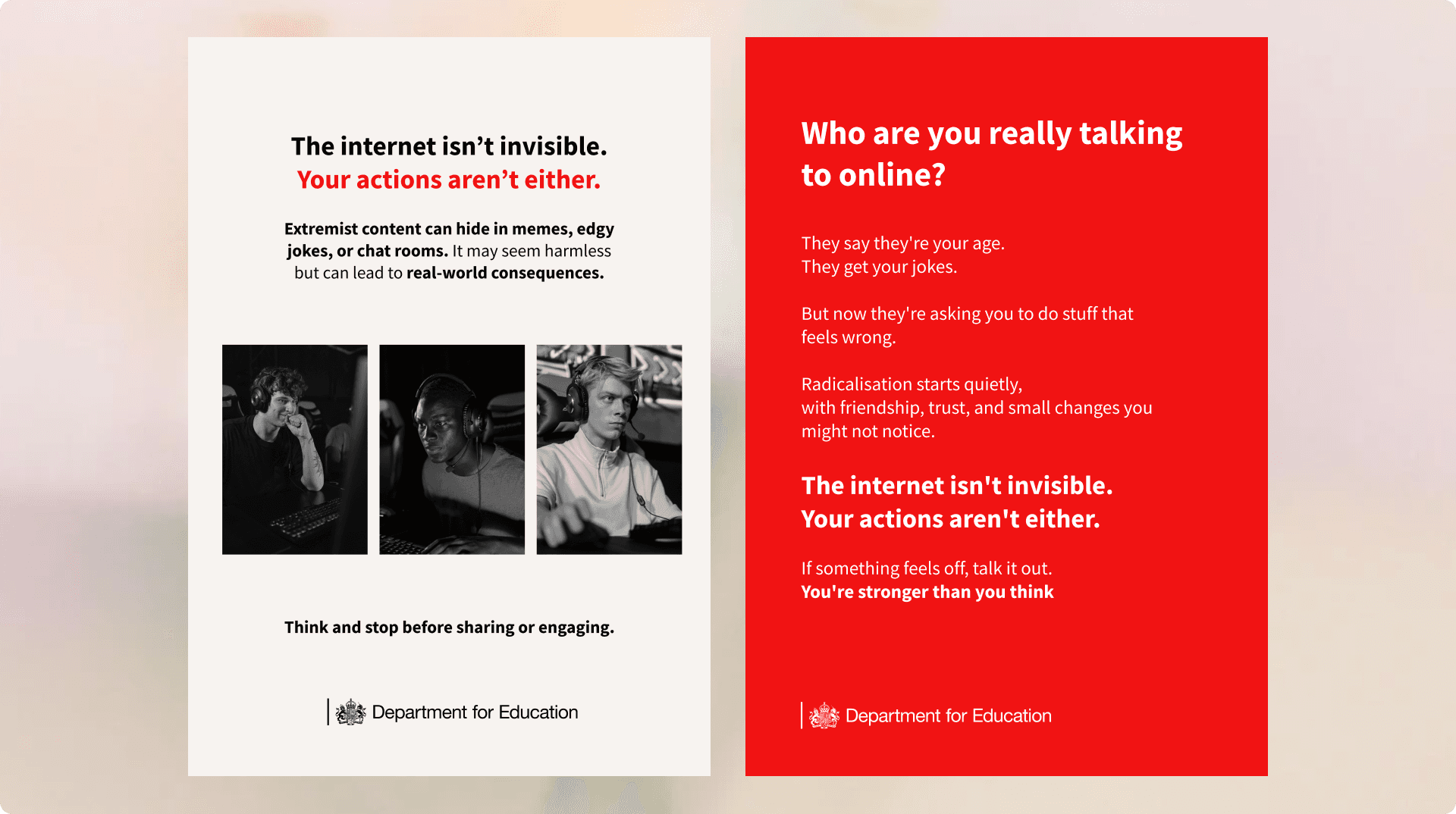
Content tailored to different audiences and platforms
Three visual directions, with two taken forward
A core campaign line used across materials
Impact
Campaign adopted for national rollout through schools (2026)
Alignment across education and policing partners
A clear, shared way to communicate a complex issue
Demonstrated how design can drive clarity in sensitive, high-risk areas
Reflection
This was less about design output and more about making a difficult problem clear enough to act on.
The work showed how design can shape understanding, not just presentation, especially in areas where the risks are subtle and the stakes are high.
Confidentiality note
This project has been simplified due to the sensitive nature of the work.